
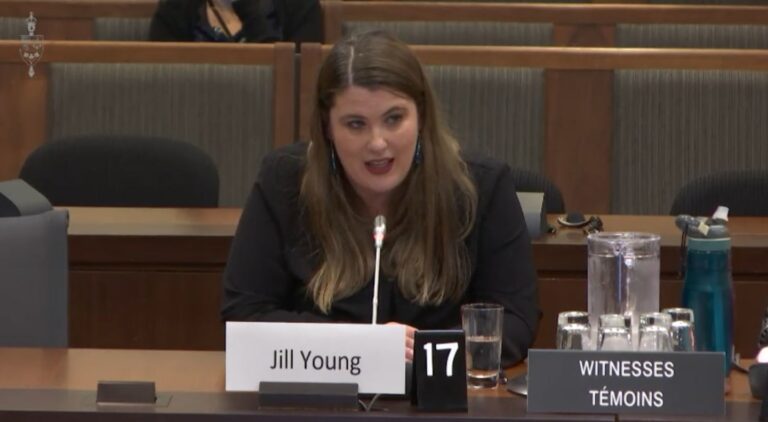
Progress happens when we as women, organizations, and group speak directly to policymakers at every level.
Recent changes to Canada’s Criminal Code will strengthen protections for women, children, and survivors of violence, reflecting years of advocacy by organizations like ours and many other front-line service providers.
In June 2026, the federal government passed Bill C-16, also known as the Protecting Victims Act, a significant update to Canada’s criminal laws aimed at addressing gender-based violence, protecting children from exploitation, and responding to modern forms of abuse, including those occurring online. Most provisions will come into force on July 18, 2026.
Representing one of the most consequential criminal law reforms in decades, Bill C-16 seeks to reduce barriers and delays in the justice system, strengthen protections for survivors of sexual and intimate partner violence, and better safeguard children from predators.
At its core, the legislation is about creating a more responsive justice system for survivors. It formally recognizes femicide as first-degree murder, introduces stronger legal tools to address coercive control – patterns of behaviour used to isolate, intimidate, and control a partner – and enhances protections against child exploitation, including offences involving digital technologies. The reforms also modernize how courts respond to intimate partner and sexual violence. The legislation includes measures aimed at improving the experience of victims within the justice system, outlining clearer recognition of the impacts of trauma, as well as reforms intended to reduce delays and improve how cases involving violence are handled.
For organizations like YWCA Lethbridge, these changes are significant. Every day, we work with women and families navigating the realities of domestic violence, coercive control, and systemic barriers to safety. The inclusion of coercive control in federal legislation reflects what survivors and advocates have been saying for years: abuse is not always physical, and early patterns of control must be taken seriously.
Outside of the criminal justice system, the Supreme Court of Canada has recently recognized a new civil claim for intimate partner violence, acknowledging that abuse can take many forms beyond physical assault. The new tort reflects what survivors and advocates have long understood: coercive control can include emotional manipulation, financial abuse, isolation, stalking, humiliation, and other behaviours that strip away a person’s independence and dignity. Survivors may now be able to pursue civil damages for this harm, and these claims can also be considered alongside family law issues such as parenting and support.
Our advocacy has been part of this broader national conversation. In November 2024, Jill Young brought the realities of gender-based and intimate partner violence in our region directly to Parliament through testimony before the Standing Committee on the Status of Women. Speaking from the perspective of a rural regional hub, she shared the challenges faced by survivors in Lethbridge and surrounding communities, and highlighted how complex socio-economic factors make sustained support from all levels of government essential.
That contribution – alongside the voices of survivors, advocates, and front-line organizations across Canada – helped reinforce the need for laws that better reflect the realities of violence and exploitation.
While legislation alone cannot end gender-based violence, it is an important step. Stronger laws provide better tools for prevention, intervention, and accountability, while sending a clear message that the safety and dignity of women, children, and survivors matter.
For YWCA Lethbridge, these reforms validate the experiences of the survivors we support every day and recognize the reality that many forms of abuse begin long before physical violence occurs. They also demonstrate that advocacy from local organizations can help drive meaningful change at the federal level.
As these changes come into effect, YWCA Lethbridge remains committed to supporting survivors, advocating for continued improvements, and ensuring our community understands both their rights and the resources available to them.
This moment is a reminder that change happens when communities speak up, and when those voices are heard.
For more detailed information about Bill C-16, click here to go to the Government of Canada website.